Out of Sight, Out of Mind (Prototype)
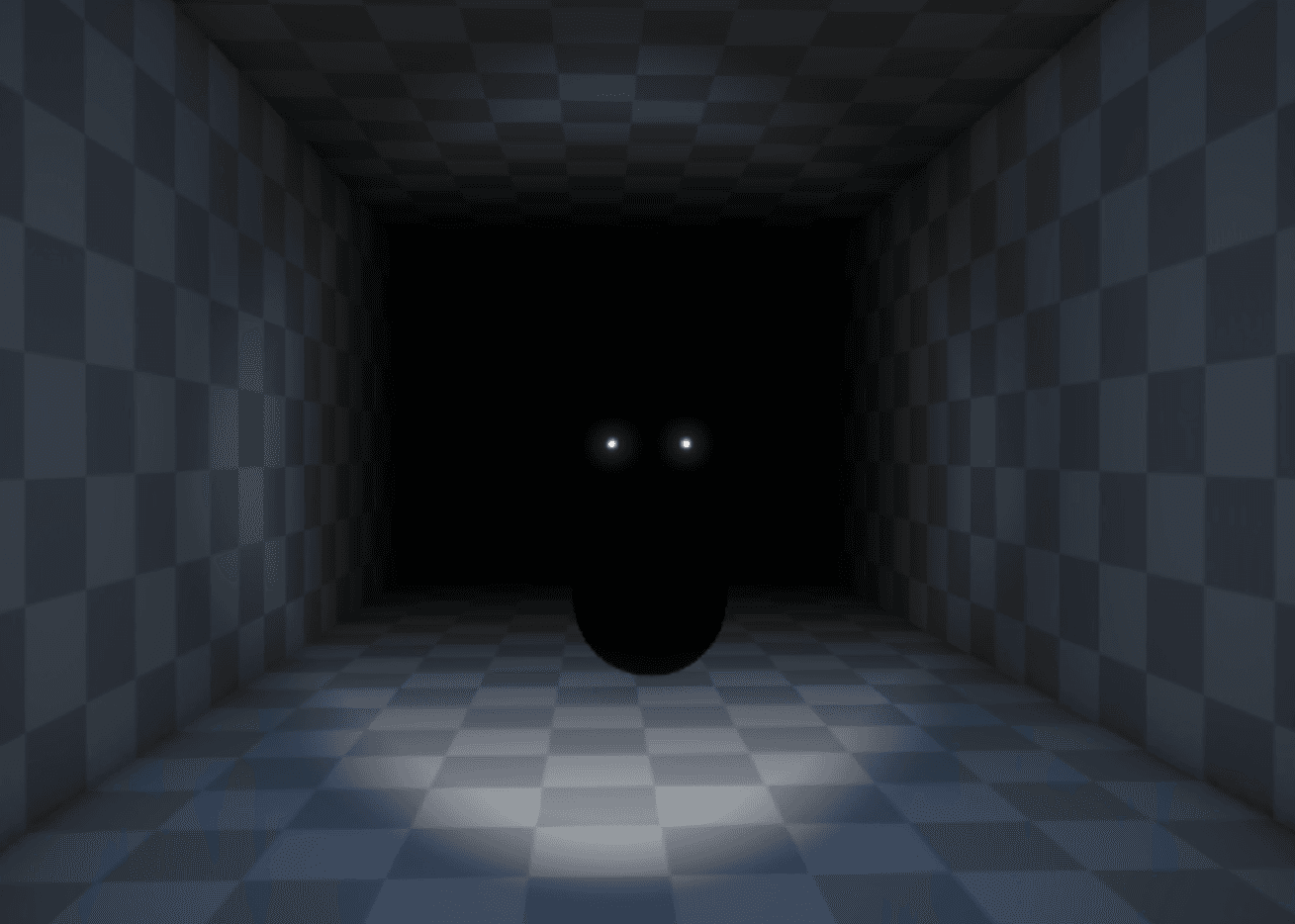
Out of Sight, Out of Mind is a prototype project centered around creating an innovative mechanic. I asked myself the question: What if you could look away from enemies to stop them from attacking/pursuing you? And created a vertical slice of a horror/puzzle game that could be developed into a final, polished project with strong mechanical and systematic fundamentals.
Overview & Inspiration
Core Statement: A single-player horror game where monsters/enemies won’t hurt you if you aren’t looking at them, diverting player expectations and cultivating a tense atmosphere with unconventional horror interactions and monsters that adapt to it.
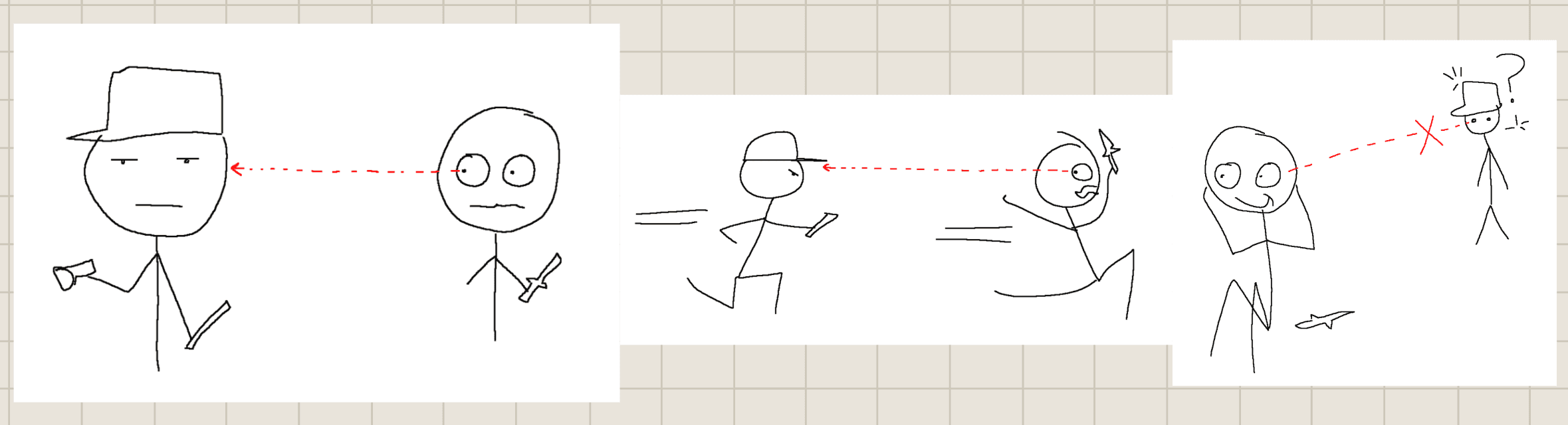
I was inspired by a multitude of titles and researched some of their mechanical language as well as leaning into something that felt unconventional yet familiar, and landed on a mechanic that diverted player expectations positively. Some titles I referenced include Superhot for its unconventional player controls and interaction with enemies, as well as SCP: Containment Breach as an inspiration for using the player’s vision of an enemy as a mechanic.
Design & Iteration
Early Explorations
Before prototyping, I had to answer some unknowns and gain some insights into what players would experience. I developed a “no-code” prototype where players could run through the mechanics of the game in a familiar environment and gain some feedback before I started developing digitally.
The rules were simple: I gathered a group of testers where one player would act as the player and the rest as enemies. The player would close one eye and look through a cardboard paper towel roll, moving around a space to find a collectable and return it to where they started. If any of the NPC testers saw the player’s eye or their skin around it through the tube, they would be able to move/attack the player. If not, they had to stand still in place.
This ended up being a great low-time commitment/budget way to explore my mechanics and systems, and was very effective in giving me insights into balancing, level/spacial design, interaction, ways to prevent mechanic abuse, and most importantly, its overall “fun” factor before I started a formal prototype.
First Prototype
Once I began my formal prototype and tested the viability of the mechanic, I developed more “curated” interactions that incorporated the theme and digital-only features. This included different enemy types, atmosphere, player controls, and light level design.
I tested this prototype and gained a lot of great insights about pacing and balancing, but mostly on clarity of the mechanic and how it’s delivered to the player, which was my main focus for the next prototype. (see Research that Shaped Design Decisions for more)
Final Prototype
In this prototype, I really hammered down on conveying my systems through visual/audio feedback and creating a “flow” that teaches players naturally how to understand and utilize the mechanics through scaling progression and new encounters. This prototype also included small balance changes, visual/audio feedback, and first passes of new systems I plan to add to future prototypes (like the enemy disappearing when the flashlight is off).
Research that Shaped Design Decisions
I took my time looking into SCP: Containment Breach, specifically the monster “Peanut,” which doesn’t move if you look at it. I gathered a lot of field notes from friends who play the game and how they would normally “beat” or “cheese” the enemy, giving me insights into balancing at an early stage to make sure the mechanic in my own prototype is prominent enough and used as a core tool for progression.
Players commented on SCP, saying:
“I usually just never break eye contact,” or “I avoid that enemy altogether."
This was super important information to gather, as it led to design decisions that were crucial for the viability of my core mechanic. The biggest issue is that players would either completely avoid/look away from enemies or find a pathing that avoided a chase altogether. The solutions I came up with were to:
Create a vertical view angle clamp to limit vision to the view angles of enemies/monsters
Add a “wall look” system that punishes players for staring at a wall too long
Heavy dampening on the camera, preventing fast “flicky” movements that could abuse enemy detection systems. This also added to the player’s tension and feeling of “powerlessness”, further enhancing the horror atmosphere.
The addition of the flashlight and its cooldown helped “cheesing” and also added new opportunities for horror and enemy interactions
Conclusion
Overall, I really enjoyed the process and result of this demo. I had a great time designing using research and developing longer-term, and I’m proud of the vertical slice I’ve created and excited to see where I take it in the future.