🗓️
2026
Beastly Beats
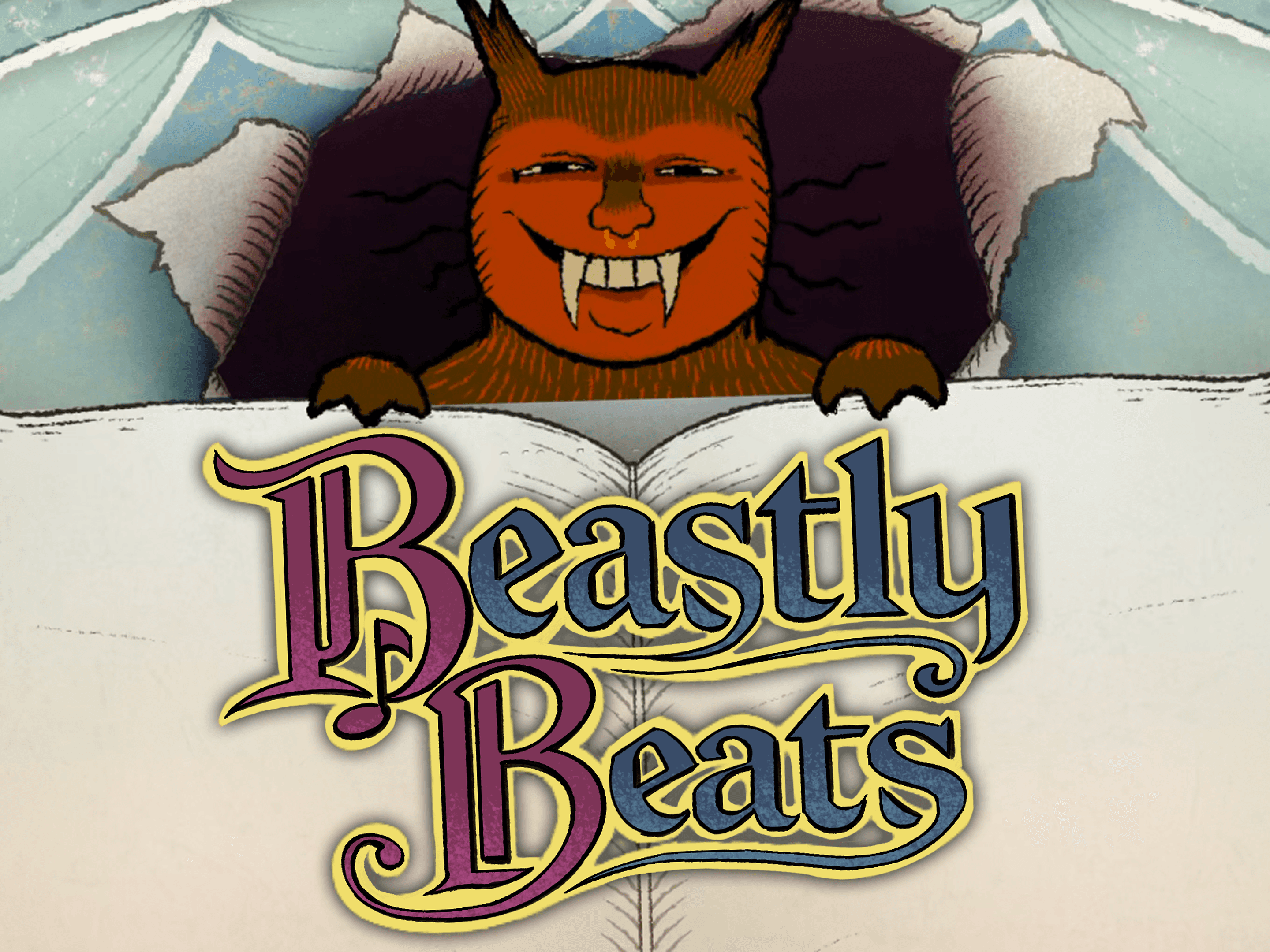
Beastly Beats is an alternative controller based rhythm game where players use animals as instruments to defeat an evil cat king in an absurd medieval premise.
Overview & Inspiration
Beastly Beats began with a simple question: what if music could be used as a form of resistance? The game takes place inside a living medieval storybook, where a band of animal musicians performs in a whimsical fantasy kingdom ruled by the Evil Cat King- a tyrant determined to silence music, creativity, and self-expression.

Gameplay
Inspired by Guitar Hero and Rock Band, but pushing the genre further: the Cat King actively interferes during play- swapping note tracks, flipping the storybook, shaking the stage, clouding the screen in darkness. Players must adapt in real time rather than memorize patterns. The physical stage blurs game and reality: when the Cat shakes the note highways, the stage vibrates; when darkness falls on screen, smoke fills the stage. Lighting responds dynamically to performance, and spectators are encouraged to cheer, turning the experience into something closer to a live concert.
Narrative
Players begin as observers, watching the band perform as if reading a fairy tale. When the Cat King destroys the animals' instruments, the story appears headed for a tragic ending. At this turning point, players break the fourth wall and step into the story, physically interacting with the animals to help them become living instruments and continue the music themselves. The animals never defeat the King through violence- they resist through cooperation, adaptation, and continued creation. Music becomes a symbol of unity, hope, and peaceful resistance.

Visual Design
The art direction draws on medieval manuscripts, illuminated texts, and historical creature illustrations, embracing their exaggerated anatomy and odd proportions as a source of charm. Characters are intentionally expressive and humorous; the Cat King is designed to feel playful yet unsettling. Textured line work, parchment-inspired colors, and decorative borders place players inside an ancient book, while each animal has a distinct key color for quick note identification in multiplayer.

Physical Design
The physical build of Beastly Beats was shaped by two contrasting references: medieval storybooks and modern concert culture. The goal was for players to feel simultaneously like they were stepping into the pages of an ancient book and standing on stage at a music festival. The environment therefore pairs illustrated storybook aesthetics with concert trusses, stage lighting, theatrical effects, and live-performance staging. This deliberate contrast reinforces the idea that music can connect people across different eras and cultures.

Custom animal controllers
The centerpiece of the physical design is a set of custom-built controllers in which the animals themselves become the instruments. This concept came directly from the narrative: after the Evil Cat King destroys the band's instruments, the animals become the source of the music. Rather than handing players guitars or drums, each controller was designed around a gesture unique to its animal- shaking a snake's rattle, flicking a pig's tail, squeezing a goose's neck- each producing different notes and sounds.
The interactions are intentionally tactile, expressive, and funny. There is something inherently ridiculous about a group of players standing on stage playing animals as instruments to overthrow a tyrannical ruler, and that absurdity became a deliberate part of the experience, keeping the heavier themes of resistance and oppression approachable through play.
Hardware and fabrication
Behind the scenes, most inputs use simple contacts or switches, translated into unique interactions for each animal. Arduino microcontrollers and modular hardware systems allow the animals to function as reliable game controllers while still reading as theatrical props rather than peripherals. The modular approach also made the rig easier to build, maintain, and adapt during development.

Stage as interface
The physical stage is not just a backdrop, but a part of the game interface. Players are placed on an actual concert-inspired stage rather than side by side at a screen, becoming performers alongside the animals. This lets the team blur the line between the game and the real world: when the Cat King shakes the note highways, the stage itself vibrates beneath the players; when he clouds the screen in darkness, smoke fills the stage. Lighting responds dynamically to player performance, shifting between triumphant and oppressive states as the battle unfolds.
The audience is built into the experience as well. Spectators are encouraged to cheer, react, and engage with the performers, transforming what would normally be a passive viewing experience into something closer to a live concert.
Design intent
Ultimately, the physical design exists to reinforce the narrative and themes, and to create interactions that would be impossible in a traditional video game- tactile, social, and performative in a way that a standard controller never could be.

Special Thanks
Kaine Johnson - Game Deisgn
Joey Matsumoto - Art
Kevn Guo - Art
Justin Andarza & the Warped Worlds team